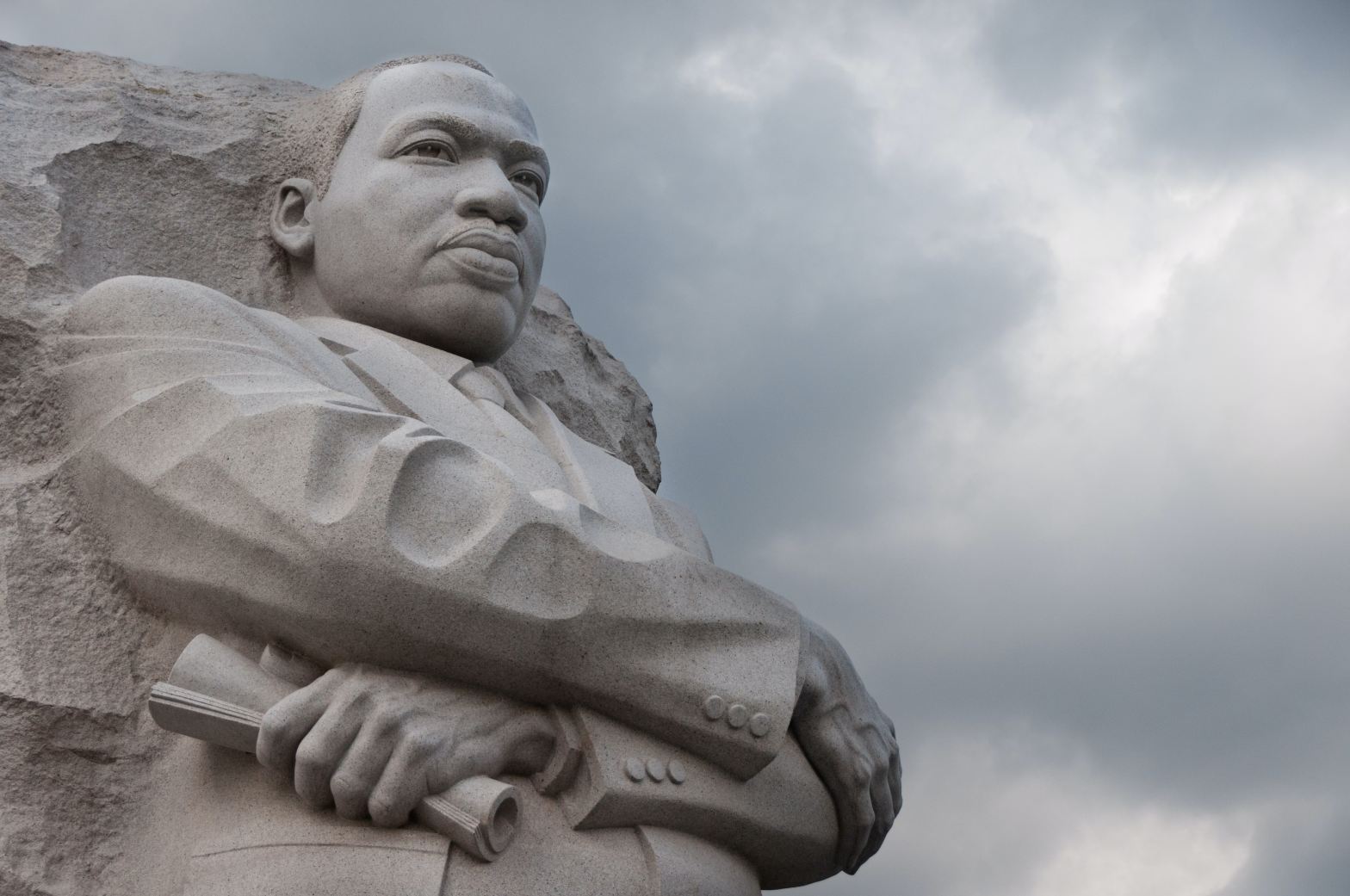
Happy MLK Day. Here’s a classic SNL skit containing some law-in-life implications as we consider the legacy of Martin Luther King, Jr. As a Black man in America whose parents lived through the Civil Rights era, I have often felt the weight of the law on MLK Day wondering if I’m doing enough to honor King’s legacy. Am I truly using that time off work to meaningfully reflect on his sacrifice? Thankfully, there’s a sacrifice that actually justifies us “apart from the works of the law”! I think the good Reverend would want us to rest in that good news above everything else. Anyways, I found some relief in this clip…especially the ‘punchline’. Enjoy…and know that you are forgiven if you just take the day off to relax, play some air hockey, or get drunk and go to Atlantic City…
Friday Reflections | January 12th

Happy Friday! I’m a little late to the party on this, but I wanted to squeeze in my ‘top ten’ list for 2023 articles that helped me see grace in practice, law/gospel implications, and the law-in-life. My year-end list is followed by an end of the week round up of where I noticed grace intersect with daily life and pop culture. Thanks for reading…and feel free to drop a comment or share some of your favorite articles, anecdotes or related in the comment section. Enjoy!
Where I saw grace in 2023…
I’m an avid PBS Newshour viewer – it’s part of my evening ritual. This piece from Rainesford Stauffer, a freelance writer and author of “All the Gold Stars: Reimagining Ambition and the Ways We Strive,” challenges the way in which we think about ambition and burnout – particularly among young adults. Check out her Brief But Spectacular take on this pertinent topic.

The following might as well be the premise of Sister Act 3. Where is Whoopi Goldberg when we need her? In the small town of Gower, Missouri, several pilgrims flocked to witness the exhumed corpse of Sister Wilhelmena Lancaster whose remains have not shown any signs of decay since she died in 2019. This is indeed what it looks like when your life is so sanctified that even death can’t corrupt you. The preservation of Sister Lancaster’s body gives new meaning to the psalmist’s words, ‘you will not abandon me to the realm of the dead, nor will you let your faithful one see decay.‘

Speaking of remarkable women of faith, this story profiles a Milwaukee woman who took the Great Commission to heart when two teenagers attempted to carjack her in a grocery store parking lot. Known as ‘Miss Edith’, the local evangelist literally preached the gospel to her assailants as they jabbed a gun into her side and attempted to drive off with her vehicle. The power of God’s word evidently took effect as the thieves abandoned their mission and took off running. Edith indicated she hopes they return so they can finish their impromptu church service. She only regrets that they left right before altar call…

Staying on the church theme, here’s a humorous anecdote about a man who felt convicted when his wife showed him a picture of himself asleep in the middle of Sunday service! Jamie Wooldridge of Southgate, Texas celebrated the milestone of losing 100 pounds due to being confronted with what he said was an unflattering image of himself. Indeed, when the mirror of God’s law (via a cell phone pic in this instance), shows us ourselves, we should feel compunction…however, it is the function of the gospel, not the law to inspire us to change…I suppose this was the rare exception…

Did you know Kenan Thompson, the longest running SNL cast member to date nearly quit the show due to immense insecurity and self consciousness? Thompson released a memoir last year in which he details the depressive feelings that ensued when he found himself stumbling over his lines and failing to attain adequate air time in SNL sketches. Having reached a low point, he decided to confide in fellow cast member, Maya Rudolph, whose words functioned like grace imparting life and restoring Kenan’s confidence. According to Thompson, Maya assured him,
“‘It was a no-brainer,’ she said. ‘We could tell you were ready and you’re adorable. We all said, ‘Obviously, it’s Kenan,’”
“I fully freaked out hearing that. I literally had a seat next to one of the most talented performers I had ever seen. Her pedigree was legendary,” he gushes. “To be complimented by someone you admire was humbling and enlightening. I wasn’t just a kid laughing at his own jokes in front of the mirror. I’d been validated.”
Validation via an external word…sounds familiar. I’m so thankful for Maya’s demonstration of grace in practice…otherwise, the world would have missed out on Black Jeopardy and the inimitable, Sump’n Claus…

I’m not a follower of GloRilla’s music, but I’ve heard her name and know enough about her to recognize she’s a Gen Z hip hop artist. She recently shared in an interview that despite her gritty and graphic music (reflective of the Memphis culture in which she was raised), she actually grew up in a strict, conservative Christian home in which most holidays and secular entertainment were forbidden. Due to the legalistic environment of her upbringing, she and her brother resorted to stealing Lil Wayne and Drake CD’s…and of course, her rap career eventually emerged in spite of the heavy atmosphere of ‘law’ in the home. The letter of the law indeed produces what it prohibits…it can never create what it commands…Still though, I was fascinated by how her parents despite proscribing worldliness in the home, continue to show unconditional support of Glo’s musical career. I suppose the words of James are apt, “mercy triumphs over judgment…” Consider the following excerpt from the interview:
GloRilla was born Gloria Hallelujah Woods in the summer of 1999 in Frayser, a neighborhood that leans on I-40 and the Mississippi River on Memphis’ north side. She was named after her grandmother. Though she can’t remember the origin story of her middle name, she was born into a large and conservative Christian family, the eighth of 10 kids, and acknowledges that her religious background may have played a significant role. Growing up, her family didn’t practice Christmas traditions like gift-giving because they believed they were derived from a Pagan custom. But even with her religious upbringing, music was always present. Her parents often played gospel artists like Kirk Franklin and Donnie McClurkin in the house.
Despite her parents’ religious beliefs, the hardcore rapper says they have always backed her career choice…

A People magazine article reported on Laura Trevelyan, a former BBC journalist who left a lucrative career to atone for the sins of her ancestors. Having discovered that her family had benefited from the slave trade in Grenada, she decided to join a movement dedicated to providing reparations for the descendants of enslaved Africans in the Caribbean. Joined by her family members, she attended a ceremony in which the entire family publicly apologized for the crimes of their forebears. According to Trevelyan,
“What I’ve learned is it’s the acknowledgment that’s important. People have said this to me in the Caribbean, ‘It’s not the money you gave Laura, it’s the support you’re giving to our cause that means so much more,’” she says.
“I think that it was meaningful. Sir Hilary Beckles was right when he said, ‘We’ve had just a deafening silence from the descendants of slave owners, and if you come forward, it will set an example and it will create momentum.’ I think that’s what has had some kind of an impact. I’m glad.”
“That’s in some way atoning for the sins of our ancestors. If we could try to propel a movement towards acknowledgment and repair for the damage of slavery, then that feels appropriate,”
That Trevelyan offers an apology signifies a step in the right direction and gets closer to the truth of what we are considering when we ponder this complex issue. There isn’t in fact a price tag you can put on the human suffering entire families endured and communities continue to suffer today. What was lost was more than economical…It’s interesting how this gesture is framed in terms of atonement for sin, especially in our secular age in which such consideration is considered antiquated and passé. Nonetheless, the conscience bears witness to the universally ingrained lust to self justify – even for the crimes of those in our familial lineage. I’m reminded of Paul who in mentioning his pedigree does so to shame the self righteousness that he once trusted in. While Trevelyan’s motives are beyond knowing, her action her signals an attempt to right a societal wrong she is willing to acknowledge. While such an endeavor could be in one sense, a good step toward creating a more just society, she can no more atone for the sin of her ancestors than I can recover the lost legacies of mine…

Who knew there was such a thing as death technopreneurship? According to this article from Vox, we humans have found a way to literally capitalize on humanity’s greatest enemy and greatest fear. The justification of death itself is inherent in these new technologies in which the imitative processes of AI now seek to eradicate grief itself. But the consequences have been deadly as some individuals have come to depend on tech as a means of bypassing the normal grieving process which is healthy for us. Did not Jesus tell us those who mourn are blessed? Did not Christ himself experience grief (cf. Isaiah 53)? The article shows the limitation of tech becoming our end all, be all…Tech can’t replace humans…tech can’t replace our need for one another or our need for God… God is ‘accessed’ so to speak via our griefs, for as the psalmist reminds us, “He is near the broken hearted…”

Former Disney employee Taron Sargsyan celebrates the second chance the company gave him after he spent $24,000 on their corporate credit card to support his addiction. After reaching a critical breaking point, he decided to confess his indiscretions to his employer after which he received an unexpected opportunity to pay back what he had stolen. After squandering the second chance Disney gave him, the former software engineer was yet inspired to enter rehab as a last resort (no pun intended). What he has to say about his experience is amazing…
Something was different about this rehab experience. When I walked into this rehab facility, my imagination convinced me I was seeing important people from my childhood. In group therapy, the facilitator looked like the first teacher I had in America after emigrating from Armenia. Memories from my childhood flooded back when I saw her. Hearing her soothing voice teleported my mind to fourth grade. I felt like a child again. She reminded me of my innocence — of the person I was before my addiction. My chin quivered. I had somehow forgotten the fact that I was not born addicted to drugs.
In this group session, people read stories that deeply resonated with me. The stories felt like they were written just for me. I couldn’t stop crying. I felt like the main character in my own Disney movie.
These people in my rehab reminded me of my humanity. Of course, Disney had nothing to do with my rehab stay. But the company’s compassion in not kicking me to the curb at one of the lowest points made me believe in my ability to change for the first time.
Though, we are indeed born sinners (cf. Psalm 51:5), I can truly appreciate Sargsyan’s assessment that reminds me of a Bryan Stevenson quote, “Each person is more than the worst thing they’ve ever done.” Furthermore, the gospel offers us something infinitely greater and more freeing than needing to be the main character in our own Disney movie per se…we get to lose ourselves in God’s grand narrative where the central protagonist is His Son, in whom we have been given redemption, the forgiveness of our sins…
I will close out the 2023 year-end wrap up with this moving piece from Business Insider about an illness known as Williams Syndrome which is a rare genetic disorder that incidentally “causes extreme friendliness” among those who possess it. An affliction that results in the fruits of generosity, kindness, consideration, and graciousness sounds akin to the way the mystery of grace works in the kingdom of God. Hayley Cuccinello, senior finance reporter at Business Insider focuses her news story primarily on Tobi Akbas, a young man who lives in Garrison, New York where he seeks to reconcile the challenges of living with Williams Syndrome amidst the struggle of finding community among likeminded individuals as well as those whom the article refers to as being ‘neurotypical’. Tobi’s interests and endeavors range from his role as an ambassador for a local volunteer firefighting squad, to his leadership position as an unpaid karate instructor, to his online motivational posts featuring ‘Tobi Tips’. I was most impressed by how what appears to be a debilitating disease facilitates the kind of character and attributes that would make for a much more beneficial world and community. Or as Cuccinelo notes,
It is hard to spend time with people who have Williams syndrome and not wish that everyone were a little less cynical and showed a little more care for one another.
Now for 2024 stuff!
Check out the law/gospel highlights from this week!
Shedding New Light on Roman Christianity

A team of archeologists recently discovered the ruins of a fourth century pagan temple in the town of Spello, about 70 miles from Rome, Italy. An excavation team led by Douglas Boin, a researcher at Saint Louis University uncovered the relic which provides new insight into the shift in the Roman world from pagan worship to the preponderance of Christianity. An article from Newsweek notes how this discovery challenges our presuppositions about the manner in which society changed from its pluralistic worship of pagan deities to the Christian worship initially instituted by Constantine, Rome’s first Christian emperor. According to Boin,
“It shows the continuities between the classical pagan world and early Christian Roman world that often get blurred out or written out of the sweeping historical narratives,”…
Boin said the discovery indicates how societal changes in Roman times took place very slowly. Even though Constantine was the first emperor to convert to Christianity, it did not become the official religion until around 70 years later. In this period, those who worshipped pagan gods gradually converted to Christianity.
“This building, in a very radical way on its own, shows us the staying power of the pagan traditions that had been on the ground for centuries prior to the rise of Christianity. We are on the cusp of giving people a very visible piece of evidence that really upends the neat and tidy ways people think about big moments of cultural change.”
“It shows us that the path from paganism to Christianity was filled with all sorts of strange detours and odd cultural mixing, not all of which would be remembered fondly by authorities in the later church. Just as pagan Romans blended patriotism, imperial ideology, and religion, Christian Romans in Constantine’s time did the same.”
Scorsese Returns to Jesus…

Director Martin Scorsese, well known for classics like Mean Streets, Raging Bull, Goodfellas, and The Departed returns his focus to one of his favorite themes: religion and spirituality. He has reportedly completed a script which he wrote with Kent Jones for a film depicting the life of Jesus – yet set in a modern day context. While such a precedent for this approach was set by films like Godspell and Jesus Christ Superstar in the 70’s, this will constitute Scorsese’s second approach at retelling the greatest story ever told via his own unique lens and sensibilities (I am referring of course to 1988’s controversial Last Temptation of Christ). While the veteran director once aspired to attain the priesthood, it is evident that his films function in an intermediary capacity, reflecting his desire to reconcile questions and matters faith against the banal and gritty realities of not only the New York streets, but life in this mortal coil in general. Despite their dark and at times profane content, Scorsese films retain a spiritual transcendence that pervades the narrative, while often depicting protagonists in the midst of some kind of existential crisis. The upcoming Jesus film (which begins shooting this year) is based on the book by A Life of Jesus by writer Shūsaku Endō (incidentally the same author whose work inspired 2016’s Silence). For an apt distillation of how Scorsese’s faith informs his filmmaking, I recommend this article that was originally published by the New York Times. And of course, this more recent piece in the LA Times is worth your time as well…
Sho Baraka Weighs in on Katt Williams
Christian Hip Hop artist, Sho Baraka weighed in on the ongoing Katt Williams controversy that has been flooding my algorithm (and perhaps yours too?) this week and last. I appreciated Baraka’s wit, wisdom, grace, and humility as he attempted not so much a critical commentary, but rather a redemptive lens by which to view the current fallout that has persisted as Williams appeared on the podcast, Club Shay Shay and expounded his thoughts on various comedians and artists in the entertainment industry. I especially loved the Richard Pryor quote at the onset of Baraka’s analysis, “this may be profane, but it’s profound”. Also, Sho’s assessment of comedy as a tool to disarm our defenses while giving us truth resonates with the nature of how humor and grace cooperate to give us levity and relief (consider the Mockingbird Law & Gospel book for more insight on this). You can check Sho Baraka’s full video below!
The Christian Era of Lil Nas X?

Seemingly just in time for the release of the parodic Biblical epic, Book of Clarence, rapper Lil Nas X is set to drop a new single entitled J Christ. In a recent Business Insider article, X defended his provocative decision to utilize a Biblical theme in an artistic decision that has previously been employed by the likes of Nas, Kanye West, and Kendrick Lamar. On his social media page, he made it known, he was dedicating the record to “the Man who had the greatest comeback of all time!” Skepticism of the Houston rapper’s sincerity abounds among both fans and detractors, yet this article may indicate some measure of a genuine desire to take up his cross and follow the Nazarene…God only knows. I am reminded of Paul’s words in Philippians in which he notes,
…some preach Christ out of envy and rivalry, but others out of goodwill. The latter do so out of love, knowing that I am put here for the defense of the gospel. The former preach Christ out of selfish ambition, not sincerely, supposing that they can stir up trouble for me while I am in chains. But what does it matter? The important thing is that in every way, whether from false motives or true, Christ is preached. And because of this I rejoice.
Philippians 1:15-18
I am also reminded of Little Richard’s spiritual struggle, aptly depicted in 2023’s Little Richard I Am Everything1 in which the renowned architect of rock and roll internally wrestled with the conflict between fleshly, worldly desires and an inclination to devote himself to Christ. At one point in his life, he had apparently rejected his rock music career for a stint in Bible college. This aspect of his spiritual journey lasted but a brief season and he would continue to vacillate between the realm of hedonistic excess and spiritual devotion. However, by the close of his life, there appeared to remain a final dedication to the Lord and a surrender born out of a lifelong battle against what St Paul referred to as ‘this body of death’. Perhaps, Lil Nas X will eventually likewise find rest in the sufficiency of Christ. Who knows? God is able…
The Law-in-life: Crossing All My Teas…
Lex Semper Accusat…The law never stops accusing us…even in the most mundane facets of daily life. My box of tea promises me a perfect cup if I follow the directions. Unfortunately though, As Paul notes in Romans, the very law that is supposed to bring life in the end actually brings death…Well, at least this is also a socially conscious box of tea – you will notice is indeed certified as being committed to advancing social and environmental justice. With every sip, I can know I am fulfilling the righteous requirement, ‘to act justly and love mercy…’ Thank God though for a better cup that actually gives righteousness…one that indeed ‘runneth over’ and abounds with grace…

- learning about Little Richard’s spiritual journey has inspired me to begin making my way through Confessions of St. Augustine…stay tuned for potential excerpts in future posts… ↩︎
Emocore, Ecclesiastes, CS Lewis, and Grace…
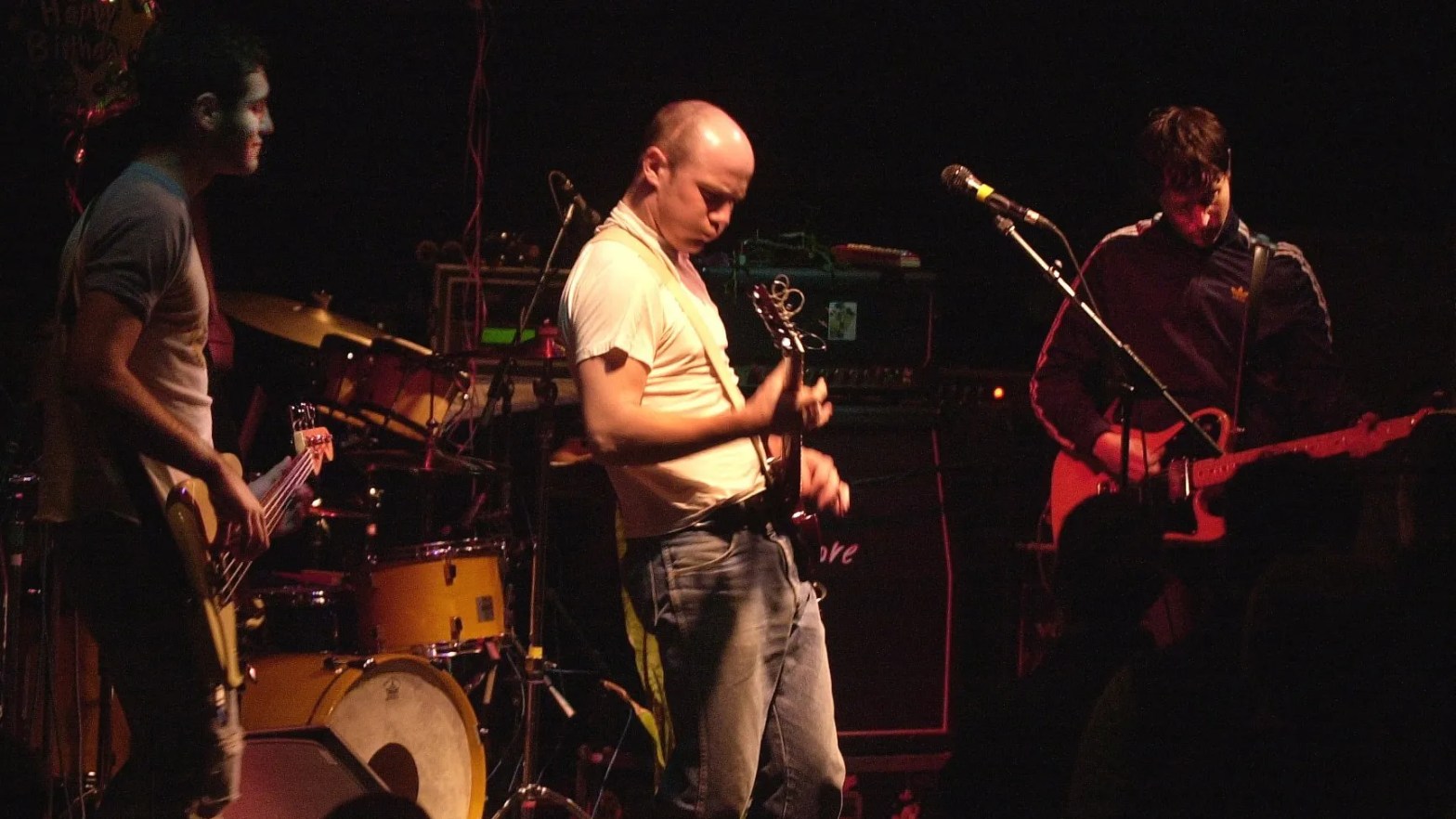
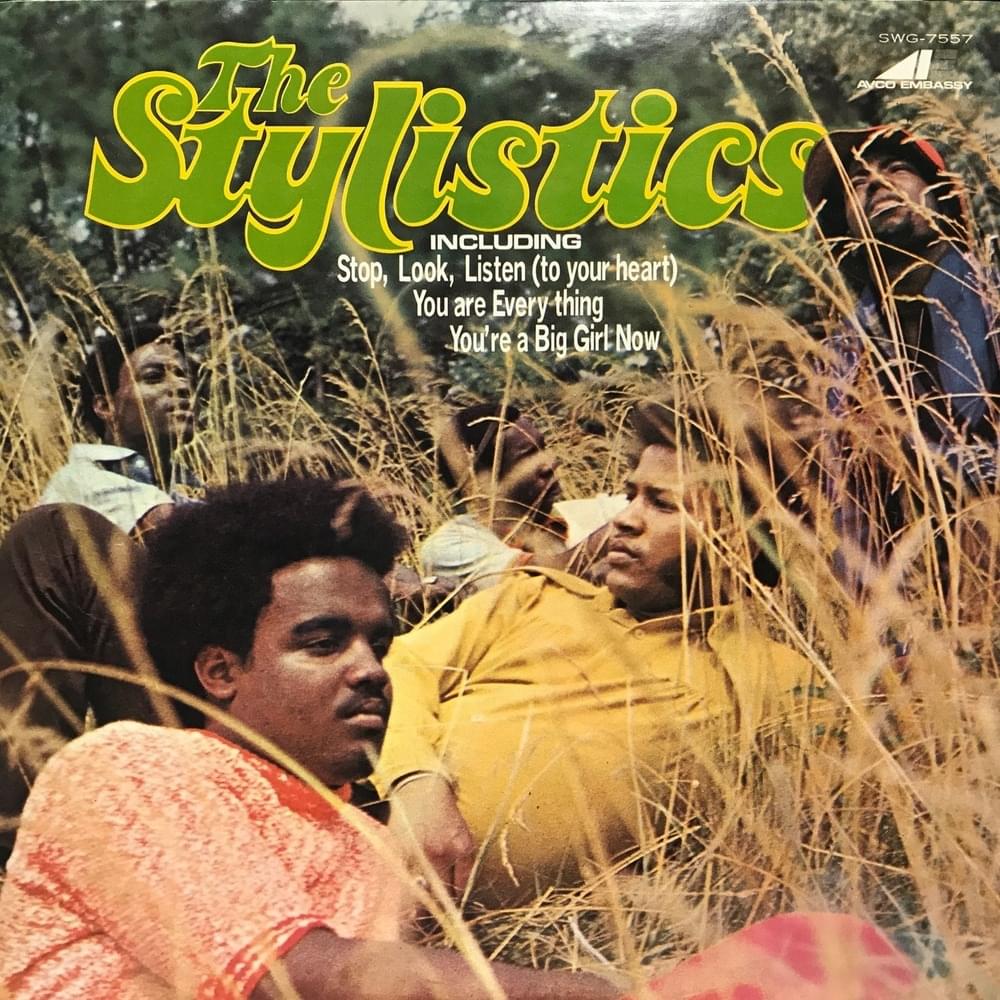
Poets are priests mediating the invisible world for us spectators. Inasmuch as they describe the transcendent realm, they are relating to us truth about life, about love, about ourselves…if they do it with raw honesty, it helps us connect with our own personal register of emotions, memories, and sets of experiences. They might even help us reconcile the tension we experience living in this veil between the seen and the unseen…and help give words to what our souls can’t articulate, but what our hearts intuitively know. The musical genre known as emocore (and its subsequent variants) arguably began with Washington DC post punk bands, Rites of Spring and Embrace, though both their respective front men, Guy Picciotto and Ian MacKaye have gone on record invalidating the use of the terminology to refer to a period when hardcore punk became infused with introspective lyrics and a more nuanced approach to musical structures. Even as early as Minor Threat’s Out of Step EP and Salad Days 7-inch, a proclivity persisted toward the implementation of more complicated time signatures and the invocation of existential lyrics. One can note parallels for example between songs like Give Me Back by Embrace and Spring and Deeper Than Inside by Rites of Spring. While we can trace this impulse back to Johnny Thunders’ You Can’t Put Your Arms Around a Memory or the Bad Brains, Why’d You Have to Go?, the roots of such sentimental pondering can be even found in the likes of 1970’s Soul and R&B as the lyrics to Rites of Spring’s Hains’ Point bear a striking resemblance to the Stylistics’ You are Everything.
The characteristic traits of emocore, including its penchant for nostalgia, and its preoccupation with themes of romance ultimately invoke the language of ‘law’ – especially as St. Paul describes it in 2 Corinthians 3:6-11.
…the letter kills, but the Spirit gives life. Now if the ministry that brought death, which was engraved in letters on stone, came with glory, so that the Israelites could not look steadily at the face of Moses because of its glory, transitory though it was, will not the ministry of the Spirit be even more glorious? If the ministry that brought condemnation was glorious, how much more glorious is the ministry that brings righteousness! For what was glorious has no glory now in comparison with the surpassing glory. And if what was transitory came with glory, how much greater is the glory of that which lasts!
2 Corinthians 3:6-11 (NIV)
Referring to the Old Testament account in which Moses descended Mount Sinai having received the decalogue (for the second time), Paul notes how the glory of the Lord that shone from the Prophet’s face, eventually faded and lost its brilliance. Daily life retains a similar effervescence as noted in the book of Ecclesiastes, in which The Preacher bemoans our universal failure to realize life as it should be…If I may be tongue-in-cheek for a moment, we could argue that Ecclesiastes was the first emocore album: a narrative documenting the hopeless journey of running through an entire recollection of stream of life experiences, while indulging in maudlin sentimentality and reminiscence.

We are all familiar with the quixotic allure of taking a trip down memory lane, revisiting the sentimental moments and nostalgic places we have been in life…Often such a reminiscence is provoked by an old photograph signifying some significant life experience or idyllic time in our lives (as implied by The Cure’s Pictures of You). I can remember fixating on an old photo of my late father and thinking about how real that captured moment was at one point. I could vividly remember everything that was going on in my life at the time and, yet that season is gone – it now belongs to the past. Still, there remained this impulse to want to recover that time, but why? Because I – because we all are in search of the elusive, nebulous ‘something’ – i.e. we are all in search of life. But life is not found per se, rather it is given. Furthermore, God is not found by our searching and seeking as Paul notes in 1 Corinthians, ’…in the wisdom of God the world through its wisdom did not know Him…’ It is we who are are sought and consequently are found in Jesus Christ.

Nonetheless, everyone’s in search of the ineffable ‘something’ to make living meaningful. One of the ways we attempt to do this is by reminiscing on old (and often failed) relationships. We may attempt to recapture the ecstatic experience of falling in love or discovering romance for the first time. Yet, the concept of romance is never limited only to dating, love, or sex – these are mere aspects thereof. When you consider what draws you into a relationship, is it not that something happens in the magic of experiencing intimacy that hints at something bigger or more transcendent? This idea extends beyond relationships, then. It even implies those memorable, iconic seasons of life like the innocence inherent in childhood for example. This is why Jesus talks about the necessity of being made like a child (Matt 18:3) or being born again in order to enter the kingdom of God. Adverse Childhood Experiences notwithstanding, generally speaking, during childhood, we tend to be more trusting. Life is less heavy because there tend to be fewer responsibilities. We are drawn to the remembrance of such ideal moments because they promise us life. In resurrecting those things, we are lifted out of our present circumstances and afforded a glimpse and a foretaste of another realm.

Nowhere is such a phenomenon more acutely pronounced than in mid 90s Midwestern emocore, replete with its signature approach that featured the use of broken time rhythms, from jazz, the interpolation of a trumpet or some kind of a brass instrument, lyrics written about sentimental, romantic themes, etc. In Milwaukee, the Promise Ring epitomized such distinctions, particularly on the EP, The Horse Latitudes (a collection of their early 7 inch recordings) that I can remember listening to on repeat…often as I slept at night. While I really didn’t follow them much after 1997’s Nothing Feels Good (notably, their breakout album), I found their early material bore a uniquely vintage quality. Two songs in particular bear significance from the Falsetto Keeps Time 7 inch – namely, Saturday and Scenes from Parisian Life. The former compliments the latter, yet the two songs musically couldn’t be any more different. Saturday is bass-driven, reminiscent of the hardcore sound of their preceding bands Ceilishrine and None Left Standing, as it trudges along, dripping with distorted guitars. Scenes from Parisian Life bears a lighter tone, intimating the indie rock direction the band would take going forward. There’s this odd dissonance between the two songs – yet, they’re complimentary, maintaining a 3/4 time signature. They share each other’s language and in some ways reiterate it. On Saturday, lead man, Davey Von Bohlen sings, ‘She drank white wine/I wanna marry your memory’. On Scenes from Parisian Life which immediately follows, the lyrics indicate, ‘Sun comes up a little later/so you can drink a little longer/I wish I had a dream last night/half the time you would be here…’ The insight is apt, that people are often in love with versions of their beloved…i.e. versions of themselves. In his classic work, A Grief Observed, CS Lewis offers insight that underscores the futility inherent in the sentiment, ‘I wanna marry your memory’. The work documents the grieving process Lewis underwent while mourning the death of his wife (referred to in the book as H.) In it, he aptly considers how the natural tendency to want to cling to a phantom notion of those we love ultimately remains an exercise in vanity.
It doesn’t matter that all the photographs of H. are bad. It doesn’t matter–not much–if my memory of her is imperfect. Images, whether on paper or in the mind, are not important for themselves. Merely links. Take a parallel from an infinitely higher sphere. Tomorrow morning a priest will give me a little round, thin, cold, tasteless wafer. Is it a disadvantage–is it not in some ways an advantage–that it can’t pretend the least resemblance to that with which it unites me? I need Christ, not something that resembles Him. I want H., not something that is like her. A really good photograph might become in the end a snare, a horror, and an obstacle.
C.S. Lewis, A Grief Observed
The tension in any relationship concerns whether we are loving the actual person or the ideal of that person. As people, we are more in love with love, than with the flesh-and-blood, flawed human with whom we are connected; with whom we live day in and day out; whose breathing we hear; whose distinct scent we know; whose faults, quirks and idiosyncrasies we have to contend with constantly. While Jesus defines real love in terms of sacrifice and laying down one’s life for another (John 15:13), how willing are we to consistently love in this manner? We are more apt to want to romanticize the person into whom we want them to be. That person then becomes the icon of what we want out of life itself. We love what we want them to be or what we think we need them to be and thereby, we end up loving a manufactured version of them. This only betrays that we are in love with an imagined version of ourselves.
The source of our grief, especially in moments of despair and failure is in the death of the idealized person we thought we were. St. Paul writes in Romans 7, “Once I was alive apart from the law; but when the commandment came, sin sprang to life and I died.” Or to restate this in the context of relationships, “I thought I was this righteous person until the relationship showed me that I am far from the sanctified vision of myself I had cherished…”. The gospel has a good word for us though. It’s no doubt painful to lose the idealized version of what you thought you were, or of what you thought life was. Through our death with Christ though, it is not just the ideal version of what we thought we were that has died, but we ourselves as well. As Paul notes in Galatians, “I have been crucified with Christ, and I no longer live…” The ideal version that we thought we were and the wretched version of what we didn’t know we were (and still have no idea we are) have been graciously put to death by God. In Christ, we will find real life in and through the deaths, failures and disappointments that we suffer.
The concept of Romance as emocore celebrates it is basically a form of ‘law’ that promises us life if we pursue it (cf. Romans 7:10)…yet the illusory picture of what a relationship ‘could be’, what we ‘could be’, what the other person ‘could be’, fundamentally, what ‘life’ could be, always remains out of our grasp, a million miles away. It’s mirage is ever present in front of us…yet its attainment persistently evades us. ‘It’s not supposed to be like this…’ is how we often feel in life and in relationships…yet in such moments, The Law is doing its perfect work in us…and the inevitable result is always death. The good news is that death is always the fertile ground of resurrection in the economy of God. The kingdom of God works by way of weakness, humiliation, frustration…and eventually grace, as Peter writes, “after you have suffered awhile, the Lord will himself restore you and make you strong, firm and steadfast.” In relationships, we often hope to find ourselves and some sense of fulfillment, but it never works. Under grace, we are found in Christ… where the work is complete, and we stand forgiven for eternity. While the explicit articulation of such a sentiment may not always make for very sexy emo lyrics, it does suffice as good news that sets us free…
The (Self) Justification of Cardi B…

Cardi B created a pop cultural phenomenon via her controversial 2020 single, WAP, an acronym insinuating what some consider the ultimate anthem of modern sexual liberty. Consequently, ironic merchandising gimmicks and parodies abound…even extending to the church realm with remixes like Worship And Praise…yes, someone actually had the gall to implement this…
While WAP is ultimately marketed and defended as a brand of ‘female self empowerment’, there are theological implications that are far more consequential. What I see here is an attempt to explore and exhaust every potential avenue of self justification in relation to the indulgence of the flesh and the self reclamation of the body – particularly as it concerns the expression of human sexuality. This is a desperate attempt to reach a new plateau of self-righteous exhibitionism and shock value.

Cardi appears desperate to find that next avenue of breaking new ground in terms of being provocative…not dissimilar to the Epicurean philosophers in Acts 17 who sat around with nothing better to do than to discover the next horizon of enlightenment and existential speculation. The author of Ecclesiastes however grounds us back in reality reminding us, “there is nothing new under the sun… everything that is has already been”. The song’s edgy content isn’t new…and that’s why I don’t quite understand the outcry from both the political and religious communities. Sexually implicit and explicit content in American pop music historically goes as far back as Bessie Smith, Lester Young, Millie Jackson, Clarence Carter, etc. In my own era, I remember getting caught listening to my big brother’s Slick Rick cassette tape. I recall the boundaries 2 Live Crew pushed and the ensuing campaign to preserve what they deemed their First Amendment rights. I remember when Ice T immediately superseded the aggressive demeanor immortalized by LL Cool J’s I’m Bad…and how as kids we thought, “whoa…it doesn’t get any more hardcore than this!”…only to be scandalized a year later by NWA…I’m old enough to recall the debates about censorship and the implementation of Parental Advisory labels on vinyl albums and CDs (remember those?). My generation survived the antics of Mapplethorpe’s obscene photography, Madonna’s Erotica, and well…pretty much anything conceived in the mind of Prince Rogers Nelson. I mean at this point in contemporary entertainment…what’s left to do that’s actually shocking?
WAP is ultimately an attempt to sanctify the body via the exercising of our alleged autonomy (cf. Genesis 3:5)…but the body cannot be redeemed through self-justification – it can only be saved by an external action that occurs outside of us…more specifically apart from us. St Paul reminds us in 1 Corinthians, ‘you were bought with a price, therefore glorify God in your body and in your spirit which are God’s…’ This is good news because it means nothing we ‘do’ per se (religious or irreligious) can save us…or condemn us for that matter. Furthermore it means everything Christ did has become our salvation. WAP has ushered in the next level of self identification for the numerous fans and devotees who resonate with its message of counterfeit freedom. Thank God though for the gospel which affirms the “freedom for which Christ has set us free”.
Minor Threat, Salad Days, and the New Birth…
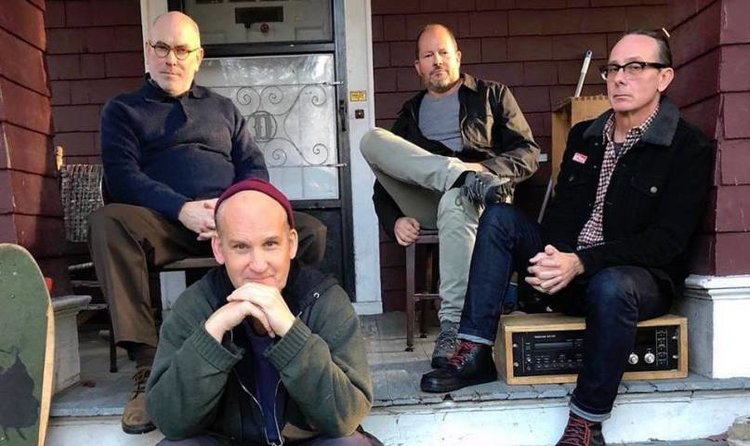
Minor Threat’s Salad Days from their final 7-inch record reflects the beginning of punk rock’s inclination toward introspective and existential themes that remained developed far beyond simple, 4/4-time, aggressive songs about the government, anarchy, etc. The song betrays profound angst about the aging process, which is an ironic preoccupation for a group of (then) 20-somethings to be concerned with. Yet, this only shows the effects of Adam’s curse, the condemnation of the law, and the imminence of death perpetually confronting us…Salad Days stands in contrast to Minor Threat, the eponymous track from their first release, in which a slightly younger (but not by much) Ian MacKaye declares,
We’re not the first, I hope we’re not the last
‘Cause I know we’re all heading for that adult crash
The time is so little, the time belongs to us
Why is everybody in such a…..rush?
Make do with what you have, take what you can get
Pay no mind to us, we’re just a minor threat…
Salad Days is ultimately a cry for rebirth in which the songwriter in a more mature state pines “for the days when I first wore this suit”, as he assesses, “baby has grown older, it’s no longer cute…” In sober reflection, the lyrics continue, “Look at us today/We’ve gotten soft and fat/Waiting for the moment/It’s just no coming back…Dwell upon our memories/But there are no facts” Indeed, nostalgic longing for ‘glory days’ (in this instance, the early days of the D.C. hardcore scene) offers little relief from the dissonance we often feel between ‘what was’, ‘what could have been’ and what immediately ‘is’ in our present circumstances.
Such contemplation reminds me of the account in John chapter 3, where we read about a man named Nicodemus, who in an intimate dialog with Jesus, inquired, “How can a man be born when he is old? Can he go a second time into his mother’s womb and be born?” Jesus informed him that he can’t in fact, go back to his mother’s womb, nor can he (or you…or I) reclaim days that have been lost or spent in vanity. The Old Testament book of Ecclesiastes details the vain, wasted life we all experience, as The Preacher decries, “All is vanity…” (literally, ‘vapor‘) concerning the various endeavors he undertook to find meaning in life. Against such frivolity, The Preacher contrasts a better effervescence that supersedes the indulgent pursuit of self-fulfillment – namely the way of life in the Spirit. Consider Ecclesiastes 11:5 in which the King of Israel pontificates, “As you do not know what is the way of the wind, or how the bones grow in the womb of her who is with child, So you do not know the works of God who makes everything.” Nicodemus, being the Teacher of Israel certainly recognized the allusion Christ was making when He described those who are born of God as being like the wind which though you hear its sound, you cannot discern its movement or predict its direction.

While the life the world offers appears to be freedom, often in the form of reckless abandon and unrestrained ambition, such living eventually runs its course and tends to encumber us in despair and disillusionment. In Christ however, we are set free by a greater spontaneity, one that is found by losing our lives, not ‘finding’ them. The apostle Paul describes as much in 1 Corinthians 15, where he emphasizes the necessity of death to one’s self as the prelude to the unpredictable life of liberty we find in Jesus. In reasserting the veracity of the Resurrection (a reality from which the Corinthians had drifted) and its implications for the believer, Paul notes, “What you sow does not come to life unless it dies. When you sow, you do not plant the body that will be, but just a seed, perhaps of wheat or of something else...” The uncertainty of how life will unfold may tempt us to romanticize the past in search of some golden idyllic era that may or may not have ever been. The life of grace is no less elusive or mysterious – as the Apostle John notes, ‘what we will be has not yet been made known’. In Jesus however, the rebirth we think we will find via self-discovery, is freely given to us as a gift…Thankfully, we don’t have to “make do with what we have’ in this life or merely ‘take what we can get’. We can just receive the righteousness of The One who gives us everything we need…in this life and that which is to come. And that is a time worth longing for…
Poison, Proverbs, and the Peace of God…

Growing up, we spent many of our summers visiting my grandmother who lived in a small Arkansas town that may have contained about 500 people max. Yet, it wasn’t too far from civilization where there were shopping malls and some semblance of metropolitan normalcy. What I distinctly remember is that amidst her humble accommodations, she had cable TV (a big deal in the 80’s mind you)…and more specifically MTV, a luxury we never enjoyed despite the many amenities we did have. For the first time in my life, I could finally watch the famed television network that had begun its popularity only a few years prior. This was 1988 and in my grandmother’s cramped day room, I had discovered…80s hard rock. I can remember binging on videos like Paradise City by Guns N Roses; Def Lepard’s Pour Some Sugar on Me; and the Bon Jovi classic, Lay Your Hands on Me. Even as I am recounting these titles, I’m recognizing the redemptive implications therein: pour something on me, i.e. anoint me – language invoking the imagery of the high priest laying his hands on the sacrificial offering. Perhaps content for another post, haha. One particular song caught my attention though and when I could, I rushed to buy the 45 record, Nothing But a Good Time by Poison. I can remember sitting in the back of the school bus in camaraderie with my peers as in unison, we bellowed out the chorus, “...Don’t need nothin but a good time/How Can I resist?/Ain’t lookin for nothin’ but a good time/It don’t get better than this… ” At 10 years old, I’m quite sure the ‘good time’ Poison was intimating was not exactly relatable…or appropriate for me and my preadolescent classmates to emulate. Nonetheless, the quest for the ‘good life’ here and now is an intuition that remains endemic to all of us…
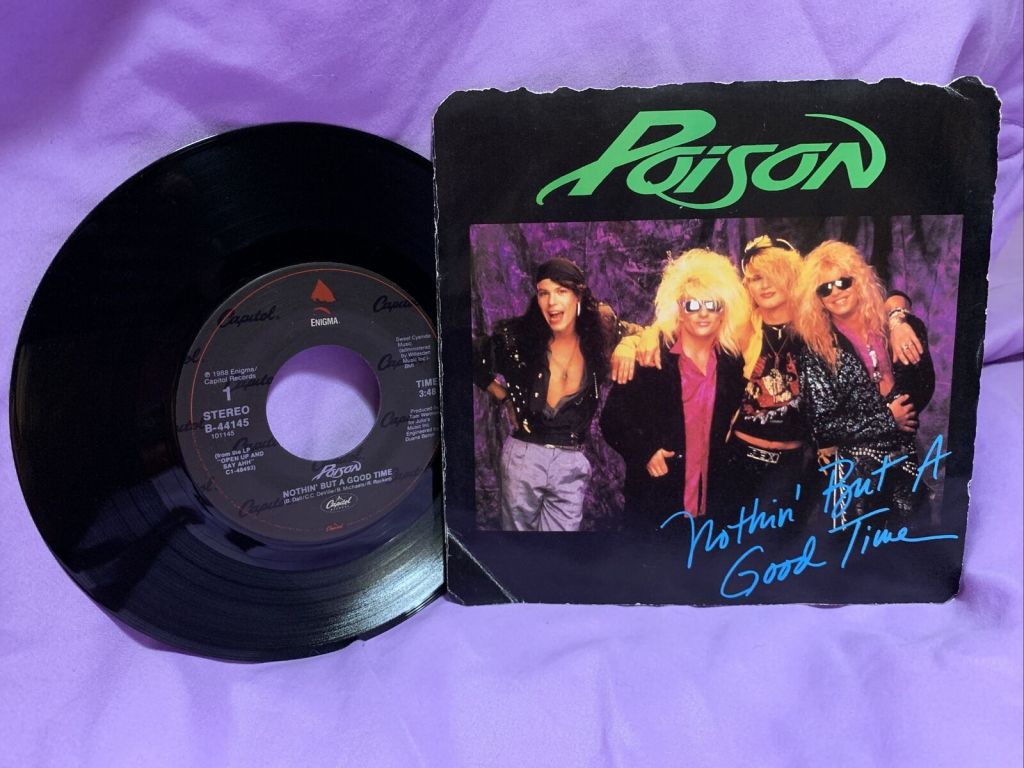
Oddly enough, this song’s refrain indirectly came to bear on a situation I went through recently. Not too long ago, I experienced a setback in my career and professional life. The details aren’t really important, but suffice it to say, there was an opportunity I was waiting for that did not come through for me…and needless to say, It was a bit of a death blow. As I tried to process the unexpected news of yet another closed door, I found it difficult to focus, concentrate or have much joy throughout the day. In short, I was in a funk and anything I tried to do to get myself out of the proverbial ditch proved to be in vain. As I evaluated the situation, the rational part of me was trying to list and weigh out the objective analysis. My self-talk consisted of, “Let’s try to focus on the positives, here. At least you still have ‘this, this, and this’ in your favor.” Or, “at least ‘this, this, and this’ didn’t happen…” or “perhaps, this was a blessing in disguise…” Well, can the blessing please remove its mask so I can get some relief!?
It occurred to me that when we experience the thorns and thistles of daily life, the part of us that feels the proverbial sting isn’t necessarily the intellectual part, which tends to remain unfazed in such situations. Rather, it’s the heart that feels the weight of our burdens. While the heart and mind cannot always be neatly distinguished, the part of us that can be spontaneously motivated to joyful animation, productivity and creativity…can also easily be crippled. I think about the contrast Paul describes in 2 Corinthians where he writes, “when I came to Troas to preach Christ’s gospel, and a door was opened to me by the Lord, I had no rest in my spirit, because I did not find Titus my brother…” In recounting this anecdote, Paul on the one hand, insinuates a door of grace being opened, implying sentiments he had previously expressed about the promises of God being Yes and Amen in Christ (2 Corinthians 1:20)…yet, this passage also portrays the dissonance we experience in this life…Yes, we have all the promises of God in Christ; God’s door is always open; His favor is always upon us, or as Paul also notes, “He always leads us in triumphal procession”… but there’s that human, emotional part of us that isn’t impervious to pain and viscerally feels the afflictions of this life. Having a ministerial door opened for him to walk in his calling somehow didn’t insulate Paul from the discomfort he felt at being separated from the companionship of his dear friend, Titus. We, who have the seal of the Spirit and fullness of Christ are not precluded either from feeling overwhelmed and defeated by life at times. Indeed, a mysterious tension persists between two warring aspects of who we are.

As I continued to process my grief, I even tried to imitate David, who in the midst of a traumatic experience, had to “encourage himself in the Lord” (1 Samuel 30) – an exhortation I have heard from many a ‘well meaning’ minister during different seasons of my walk. Yet, such casually dispensed advice tends to neglect passages like Proverbs 25:20 which indicates, “Like one who takes away a garment on a cold day, or like vinegar poured on a wound, is one who sings songs to a heavy heart.” Or what about the grief Jacob experienced when he thought he had lost his son, Joseph? The Scriptures inform us that even the faithful patriarch refused to be comforted, preferring the solace afforded by engaging with his sorrow. Apparently, the best advice we have to give people consists of religious cliches when what they really need is to hear good news. While in the religious world, we may throw out the usual catch phrases like, God is sovereign…All things work together, the irreligious world insists that we ‘look on the bright side’ or worse yet, ‘Don’t worry, be happy’. None of these adages however, speak to ‘where we are’ when we’re hurting. Ultimately, getting out of that ditch happens only in God’s timing and we’re not in control of that.
So, what does 80s hair metal have to do with all this? As I consider the anthemic nature of Nothin But a Good Time, I hear therein all the principles of hedonistic living distilled into a 4 minute song – serving as a manifesto for the primacy of the ‘self-life’. While such a credo reflects the world’s ambitions and its limited scope of life’s priorities, grace provides us a counterintuitive hope that doesn’t always appear like hope…at least not initially. It’s not so much that life doesn’t get any better than ‘this’ (as the song alludes to wine, women, fun, etc.)…after all, even ‘this’ kind of living gets old after a while (just ask the Preacher in Ecclesiastes). It doesn’t get any better than that experience of being in and out of despair and hope. To expect that life can qualitatively be better than this is unrealistic as Paul implies when he writes to the Corinthians, “If in Christ we have hope in this life only, we are of all people most to be pitied”. Here, Paul argues that the sufferings he has endured in the name of fulfilling his apostolic ministry make no sense if there is no hope of the resurrection. In making this appeal, he ardently denies the possibility of having our ‘best life now’ in this age. Yet, we tend to want there to be some semblance thereof (or at least I do). I wish the Christian life consisted of this even keel of uninterrupted spiritual victories over sin and a grace empowered disposition of unperturbed joy despite the circumstances. I mean, we’re supposed to ‘count it all joy when we fall into various trials’, aren’t we? Yet, I have found such a response the exception rather than the rule when I have encountered the storms of life. The best we can expect is to vacillate between grief and solace, to fluctuate between the feeling of “I’m in a rut” and “my senses have finally returned…” The best we can hope for here is to perpetually contend with an inescapable tension that we wish would go away. Yet such a tension is the Divinely appointed means by which the Lord works for us an exceeding and eternal weight of glory – a precious hope to be sure, but one which we cannot enjoy the fullness thereof just yet…hence our constant frustration.

As the day wore on, my senses eventually returned to me, at which point, the objective things about the situation that are in fact positives came into focus. The ‘wisdom’ part of me that can think clearly began to reign again and I had peace of mind. When we’re in the ditch, facts and data can do nothing to heal the wound or give us the relief we desperately crave…all we can functionally hear is what the wound itself is telling us and how that wound views reality, even though its perception is often irrational. In 1 Peter, the Apostle reminds his hearers (and us) that “after you have suffered a little while, [God] will himself restore you and make you strong, firm and steadfast.” Indeed, grace comes to us in the “afterward” – after the ephemeral glory of the law-in-life fades. Our initial engagement with life in this age is effervescent and transient, whether we’re talking about grievous trials that wear us out or “the passing pleasures of sin” that can easily deceive us. Once this glory wears off, that’s when there’s hope for real wisdom to set in.
One of the best illustrations I have heard concerning this ironically comes from a sermon I heard years ago that bore a moralistic overtone, yet retained some profound insights. The preacher was considering the account of David’s sin with Bathsheba as recorded in 2 Samuel 11 through 12. As may be familiar, one of the consequences of David’s sin was that the child born from their adulterous affair died. Once David discovered the child was dead, he ended his 7 day fast, got up, changed his clothes, washed and went to the house of the Lord to worship (note the baptismal foreshadowing). In other words, once he realized the situation was dead (literally), he reasoned there was nothing more he could do, as he informed one of his concerned attendants, “While the child was still alive, I fasted and wept. I thought, ‘Who knows? The Lord may be gracious to me and let the child live.’ But now that he is dead, why should I go on fasting? Can I bring him back again?…” While the main thrust of the sermon concerned learning how to move past regret, loss, and failure, there was a particular point the preacher emphasized that in retrospect makes sense to me though I had initially dismissed it as moralistic eisegesis. After David accepted the fallout of his indiscretions and received the Lord’s discipline, God blessed him with another son…Solomon, who represents ‘Wisdom’. The preacher stressed that after we ‘go through’, God is consequently able to birth some wisdom into our circumstances.

This makes sense to me especially when I consider David’s Psalm of repentance (Psalm 51) in which he writes, “You desire truth in the inward parts, And in the hidden part You will make me to know wisdom”. As he continues to grieve over his sin, he asks God to “let the bones you have crushed rejoice…” He recognizes that if he is going to get any relief from himself, God alone will have to deliver him. It is only in such a place of utter despair that we can finally recognize, “Nothing good dwells in my flesh”, and thereby find freedom from this hopeless body of death. This is the prelude to receiving a righteousness that is imputed – i.e. this is the place where Another’s righteousness becomes ours. This is where we find true peace, joy and solace. David asked for his broken bones to be restored, yet our hope is in One whose bones were not broken, yet who was pierced for our iniquities and chastised so we could have peace – the peace of God that is infinitely better than merely having ‘a good time’. In light of such good news, how can we resist?
Steven Spielberg Made Me Believe I Could Fly…


“You made me look like I can fly!…but I can’t fly…”
The Fabelmans
The final scene of E.T. remains a memorable and poignant moment for me replete with the distinct John Williams score in which the trumpets and tympanies accentuate the visceral emotions that swell as the main characters behold E.T.’s departure from their world…and from their lives. As film critic, Joshua Larsen has noted, several of Steven Spielberg’s films include shots of characters gazing upwards towards the heavens, a gesture which reminds me of the apostles of Christ beholding His ascension in the New Testament book of Acts. As protagonist Elliot (Henry Thomas), his mother, siblings and friends fix their gaze on the night skies (the original title of this 1982 classic), their facial expressions illumined by Allen Daviau’s cinematography betray the very magic Spielberg is known to evoke in his films. It would be apt to say…Steven Spielberg made me believe I could fly!
There’s a scene in Spielberg’s quasi autobiographical film, The Fabelmans in which a character named Logan angrily proclaims to Sam Fabelman (a proxy for a young Spielberg), “you made me look like I can fly…” Sam had previously screened the film he edited for their high school’s Senior Ditch Day, in which he portrayed his nemesis, Logan as though he were a god among mere mortals. Logan experiences moral compunction upon seeing an undeservedly gracious portrayal of himself and decides to confront Sam in the hallway after the film’s screening. In utter frustration, he exclaims, “you made me look like I can fly…but I can’t fly!” Yet this is precisely why we who grew up on Spielberg movies loved his work! His films created the illusions that inspired us and spoke to that part of us that is still open to the possibility that the world just might be magical…that it might in fact be inhabited by the likes of fairies, sprites, hobbits, leprechauns, or even benevolent extra terrestrials…that, as GK Chesterton has opined, there’s still something mysterious and enchanted about the world.
The Fabelmans is a love letter to film as Spielberg comments on the impact cinema had on his life. Incidentally, Spielberg became the quintessential director who shaped my childhood. I put a basket on my bike, placed a plush E.T. doll in it and rode from one end of Grant Boulevard to the other expecting to fly. I put on long johns and a winter coat and walked around the neighborhood with a ridiculous flashlight in summer because I was that impacted by seeing Elliot search for ET in his backyard…and I desperately wanted the Extra Terrestrial to come visit me too!
The Fabelmans showed how Spielberg used editing to capture both the beauty and the horror of what lies behind the veil of reality. You can see throughout the movie, the intersection between things happening in his real life and his engagement with film. For Spielberg, editing and the traumatic plot points of his personal life persisted in a unique dialog. For example, in the first act of the film, a young Sammy Fabelman witnesses a traumatic train collision in the first movie he ever saw, Cecile B DeMille’s Greatest Show on Earth. After seeing the film, he decides he wants a train set as a Hannukah gift. Sammy begins to replicate the collision he saw on screen by crashing his model trains. While his father, Burt (Paul Dano), condemns the action, it’s his mother, Mitzi (Michelle Williams), who understands that he needs to crash the trains because, “he’s trying to get some kind of control over it…” Mitzi, in response, lends Sammy his father’s 8mm camera so he can capture and constantly relive the moment. At the same time, Sam/Spielberg struggled with how to articulate the most significant and pivotal moments of his life through film. As such, this tension signifies the idea of the filmmaker functioning in a priestly capacity.

Raiders of the Lost Ark (1981) became the other iconic Spielberg film that informed my childhood. Its invocation of the Ark of Covenant and its intimation of the holy of holies bring to mind DeMille’s epic, The Ten Commandments. While Fabelmans emphasizes the influence of Greatest Show on Earth, it’s clear that Ten Commandments also made an impact. We can see this especially in the way the penultimate scene of Raiders captures the mystery and the wonder reminiscent of the Lord, who remains both powerful and terrifying, yet simultaneously beautiful (cf. Psalm 29).
The way Spielberg takes what we look at as being horrifying and haunting and intermingles that with the sense of awe and admiration sets him apart from other directors whose work I revered as a child. In ET, for example, we don’t get to treat an alien invasion as being completely terrifying, but we also don’t get to treat it as something that would be completely benign either (at least not subjectively). In the incarnate Christ, we see the coming together of these two realities. In the gospels, Jesus has terrifying moments like His Transfiguration, where the manifestation of His glory accompanied by the Father’s voiceover causes Peter, James, and John to fall prostrate in fear. Or what about Christ’s anger in the temple? It’s terrifying, yet it’s also a display of righteous zeal and pure love toward God.
Consider the Opening of E.T. in which the score retains hints of a church organ thereby heightening a sense of foreboding as we see the extra terrestrial visitors engaged in their botanical exploration of Earth. The most significant moment in the film, though, doesn’t concern the special effects, though that aspect initially draws us in, captures us and conveys something to us at a rudimentary level. What ultimately sustains us is the deeper thing that speaks to a deeper part of who we are. Looking back, I have realized my new favorite scene in E.T. occurs in the forest when the characters look up at the skies…they have been touched by something other worldly…their lives can never be the same again. The sentimentality of that moment recalls a scene in Ryan Coogler’s 2018 Marvel movie, Black Panther, which bears the cinematic marks of Spielberg. As the character, Kilmonger reunites with his deceased father by accessing a portal to the Wakandan ancestral plane, the conversation that ensues portrays a vital human to human connection while hinting at something transcendent that drives that connection. Similarly, there’s a correlation between E.T.’s arrival and his relationships with others – namely the manner in which he shares emotions with Elliot and literally experiences what he experiences through their inexplicable bond. Much like the aforementioned scene from Black Panther, there’s sort of this silent whisper connoting the deeper thing happening that works beneath the surface of the spectacular thing happening. So, initially, as a kid, I was amazed by seeing bikes flying against the full moon, ET healing Elliot’s finger, etc, but the deeper sentimental magic implicit in those final shots has sustained my heart and made ET my favorite movie at 45 years old!
1983’s Return of the Jedi is similar. What drew me in initially were the lightsabers, X wing fighters, etc. As I retrospectively consider the movie through a redemptive lens, though, the most pivotal moment occurs when Luke Skywalker discards his jedi weapon, surrenders right-handed power and succumbs to suffering, weakness and humiliation at the hands of the Emperor. He may have wielded the classic green blade in the film’s first act to save his friends, but at the saga’s conclusion, he relinquishes the arm of the flesh and, via self-sacrifice, saves the universe.
As I consider how and why these childhood films spoke to me, I’m reminded that a director can use imagery in such a way as to invoke law and grace, while using film as a medium to say something about the world beyond the veil. Jesus comes to us from beyond the veil and He is law and grace, or as St John puts it, “full of grace and truth” (John 1:14, 17). Christ, through His death, fulfilled the law that in His ascension, He might go behind the veil to intercede for us. In fact, He is the veil that was torn that we might receive His grace. When the lights come up and the curtain closes in a theater (do they still do that btw?), the magic of the viewing experience yet remains: we remember our favorite lines, or we may act out our favorite scenes…or buy the merchandise all to retain the transcendence of our viewing experience. How much more is this the case when the veil is irreparably torn from our eyes and we behold a light that never fades…St Paul indicates in 2 Corinthians that, “we all, with unveiled face, beholding as in a mirror the glory of the Lord, are being transformed into the same image from glory to glory, just as by the Spirit of the Lord“. I’d rather be scripted into that story any day!
McDonald’s Breakfast & Imputed Righteousness…

I missed breakfast the other morning. Nothing new… except this breakfast was special… it was McDonald’s breakfast to be specific! Mr. Medina had taken our orders via email because he was planning a special breakfast for the last day of our mentoring session. I and several local professionals had been participating in a mentoring project through a local high school as an extension of the work I do for the City in workforce development. This was an opportunity to pour into the lives of young men at a critical stage of life, where they begin to consider their career options and the rest of their professional lives. Was I making a real difference, though?
This is the question that had been haunting me since the program’s inception. They were nice enough guys, but again, my concern was whether I was genuinely connecting with them in an impactful manner. I had even asked Mr. Medina the same question during one of my previous visits. With his laid back and affirming demeanor, he always assured us that as mentors, our presence was appreciated even if we didn’t always per se make tangible progress with our mentees. I could tell that for him, results were less important than forming organic relationships with his students.
The morning of the breakfast, I got a late start leaving the house and realized there was no way I would make it in time. I decided just to go straight to my office instead. Disappointed that I couldn’t make it in, I emailed Mr. Medina my apologies and offered to reimburse him for my breakfast. The reply I received surprised me, though. Not only did he not want a reimbursement for the wasted food… he also noted, “I have a gift for the mentors!” I thought to myself, ‘now this is a picture of justification…’. I didn’t feel like I deserved the gift because I didn’t think I had put in enough work or shown up as often as I could have. Yet, not only was my sporadic attendance excused, but I was being gifted far beyond what my less than perfect mentorship deserved! It was as though I had mentored perfectly and consistently according to the righteousness Mr. Medina imputed to me that morning. By the way, I hope he enjoyed my breakfast for me…because he surely deserved it!

Jesus Wants Your Dirty Laundry…

The other evening, I called my son who was sitting in the living room while I was in the kitchen. I presumed he was idly watching TV when I summoned him. I was calling to tell him to sort through the laundry basket to find his clothes for the next day – something I have been desperately trying to get all my kids to be more proactive about. As I approached the living room, I was certain I would find him reclined on the sofa and gazing at his favorite show…but to my surprise, he was already engrossed in the very task I was going to command him to do. Incidentally, this was a rare occasion in which it was intuitive to him to do what was expected before I had the chance to ask! The entire incident reminded me of Martin Luther’s commentary on Galatians 5:23,
There is a law, of course, but it does not apply to those who bear these fruits of the Spirit. The Law is not given for the righteous man. A true Christian conducts himself in such a way that he does not need any law to warn or to restrain him. He obeys the Law without compulsion. The Law does not concern him. As far as he is concerned there would not have to be any Law…
Martin Luther, Lectures on Galatians
The Law pursues the believer fully expecting to find us in violation of the Father’s expectations and ready to issue its unbearable demands…yet, in Christ, we are impervious to its threats and dead to its irrelevant directives. When the Law finds us, it finds us already doing what it demands…because we have been justified with the perfect record of the obedience of Christ! To take the metaphor a little further though, the Law ultimately doesn’t find us at all because it can’t…we are hidden from its sight, seated in heavenly places with Christ, where our laundry has already been folded…and our garments have been “washed… and made white in the blood of the Lamb“.
It Is Finished.
The Last Adam and the Breath of God…
And so it is written, “The first man Adam became a living being.” The last Adam became a life-giving spirit.
1 Corinthians 15:45
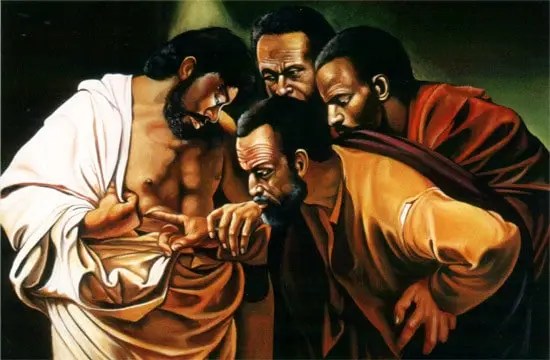
In Genesis, God reached into the ground…and breathed into the man, Adam. In the Resurrection, Jesus rose from the grave, invited men to reach into His side, and breathed on them saying ‘receive the Spirit’.
It is Finished…
 Law, Grace, & Daily Living